

What is Servant Leadership?
Defining Servant Leadership Theory
- Servant leadership is a leadership philosophy where the leader prioritises serving others above all else.
- This theory was developed by Robert K. Greenleaf, who founded the Greenleaf Center for Servant Leadership. His belief was that leaders should see themselves as servants first, putting the needs of their team members above their own.
- The servant-leader is servant first, which means that a leader must genuinely desire to help others grow and succeed.
- In this leadership philosophy, the focus is on fostering the well-being of employees, empowering them, and encouraging their personal and professional development.
- Servant leadership is a leadership practice that promotes collaboration, empathy, and ethical decision-making.
Key Characteristics of a Servant Leader
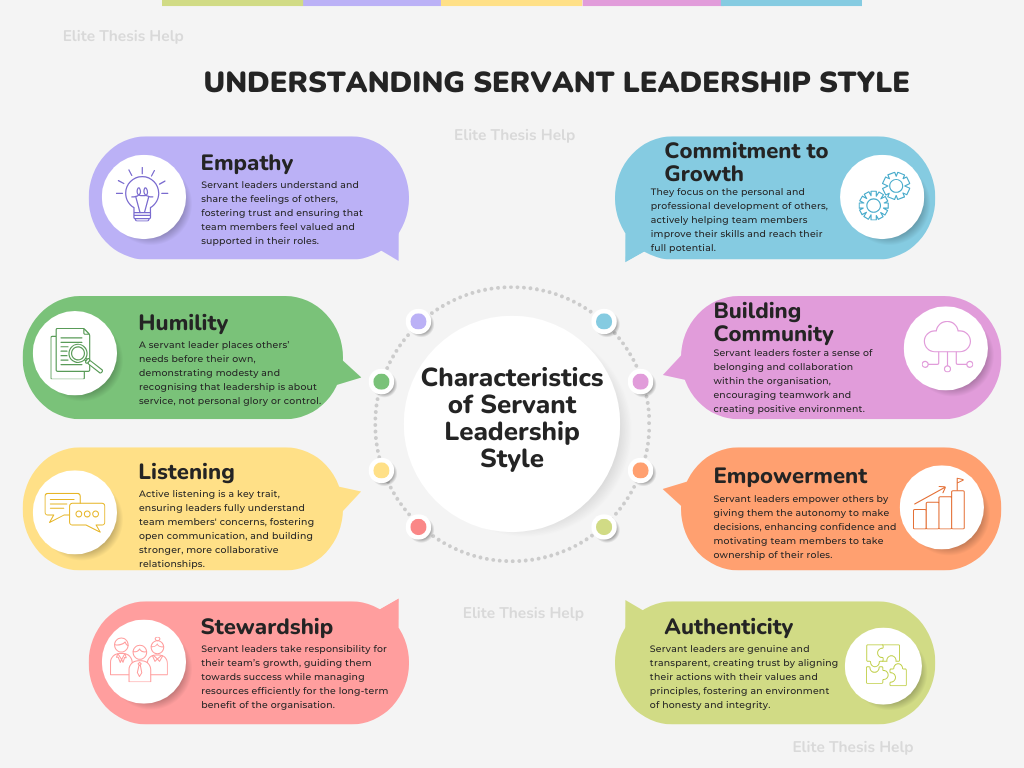
- Empathy: A servant leader listens attentively to others, striving to understand their concerns and perspectives.
- Humility: The servant-leader is servant first, always putting others’ needs ahead of their own and demonstrating humility in all actions.
- Commitment to Growth: A servant leader works towards the development of their team members, helping them grow both professionally and personally.
- Listening: Effective listening is one of the key servant leadership behaviours, as it allows leaders to understand their team’s needs and offer meaningful support.
- Stewardship: A servant leader takes responsibility for the growth and development of others and strives to protect the organisation’s resources.
- Building Community: A servant-leader is servant first in creating a sense of community within the team. This fosters trust, mutual respect, and collaboration.
These characteristics of servant leadership are foundational to creating a positive and productive environment. A servant leader must continuously demonstrate these behaviours to create lasting impact within their organisation.
The Concept of Servant Leadership in Modern Organisations
- Servant leadership is becoming increasingly relevant in modern organisations, with more companies adopting this style of leadership to improve employee engagement and organisational effectiveness.
- Leaders who embrace servant leadership are likely themselves to become servants, focusing on the well-being of their teams and encouraging growth at all levels.
- In today’s work environment, organisations are recognising that servant leadership’s emphasis on collaboration, trust, and empowerment leads to better performance and greater job satisfaction.
- Leadership also involves guiding others to perform at their best, which is achieved through servant leadership’s approach to prioritising people’s needs first.
- The Greenleaf Center for Servant Leadership has been instrumental in promoting this philosophy, helping organisations integrate these principles into their leadership practice.
- A servant leader’s leadership philosophy revolves around the belief that people are the heart of any organisation. By nurturing them, leaders ensure success and sustainability.
- Servant leadership is a leadership philosophy that’s grounded in ethical principles, encouraging leaders to act with integrity and a deep sense of responsibility for their team’s success.
- Organisations that adopt servant leadership see stronger relationships, improved teamwork, and better overall performance. The servant as leader approach fosters an environment where people are empowered and motivated to achieve their full potential.
Servant leadership is not just a leadership style; it’s a way of leading that empowers individuals, strengthens teams, and nurtures growth. By practising servant leadership, leaders not only achieve organisational success but also contribute to the personal development of their followers.
What are the Principles of Servant Leadership?
Exploring the Core Principles of Servant Leadership | Being Servant as Leader
- Servant leadership is grounded in several key principles that define its philosophy. One of the core principles is that the servant-leader is servant first. This approach prioritises the needs of others above those of the leader.
- Servant leadership seeks to foster a sense of community and collaboration. Leaders who adopt this style of leadership focus on empowering others to develop and grow.
- The servant as leader is a powerful concept in servant leadership theory. It means that the leader serves their team members by supporting and nurturing them, rather than seeking power or control.
- Ethical decision-making is crucial in servant leadership. Leaders are expected to act with integrity and fairness, always considering the impact of their decisions on the well-being of their team.
- Servant leadership behaviour focuses on active listening, empathy, and stewardship. These actions help create trust, a vital component in any effective leadership approach.
How Robert Greenleaf Shaped Servant Leadership Principles
- Robert K. Greenleaf, the founder of servant leadership theory, revolutionised leadership studies by introducing a more people-focused approach. Greenleaf’s work in leadership studies led to the development of a conceptualization of servant leadership that became the foundation for modern leadership practices.
- Greenleaf believed that leaders must serve others first, aligning with the idea that servant leaders understand the importance of supporting their teams. This principle set apart servant leadership from more traditional leadership styles like transactional leadership.
- In servant leadership research, Greenleaf’s influence is still evident, with many studies on servant leadership practices now focusing on its impact on employee engagement, job satisfaction, and organisational success.
- His principles have been the subject of leadership literature and servant leadership discourse, showing that servant leadership seeks to build strong, ethical organisations that are centred around people’s growth.
The Role of Growth of People in Servant Leadership
- One of the primary goals of servant leadership is to empower and develop individuals. Servant leadership seeks to create an environment where team members feel valued and are encouraged to reach their full potential.
- Servant leaders empower their followers by providing the necessary tools, support, and encouragement for personal and professional growth.
- A servant leader seeks to guide their team towards long-term success, rather than focusing solely on immediate outcomes. This long-term perspective supports the idea that servant leadership has positive effects on organisational culture and employee loyalty.
- In servant leadership behaviour in organizations, the focus is on creating a growth-oriented environment. The leadership responsibility of a servant leader involves nurturing employees and giving them the opportunity to excel.
- The values of servant leadership promote collaboration, empathy, and trust, which are crucial in fostering a productive environment where individuals can thrive and develop.
The principles of servant leadership revolve around the leader’s commitment to serving others, fostering growth, and acting with integrity. These principles make servant leadership a unique and effective leadership style that empowers individuals and enhances organisational success. Through servant leadership research, the positive impact of this approach on both individuals and organisations is continually affirmed, making it an increasingly relevant philosophy in leadership development and organisational practices.
How Does Servant Leadership Differ from Traditional Leadership?
Comparing Leadership Styles: Servant vs. Traditional
- Servant leadership focuses on the leader serving the team, while traditional leadership often centres around the leader exerting authority over others. In servant leadership, the servant-leader is servant first, prioritising the needs and growth of others before their own.
- In contrast, traditional leadership typically places the leader at the top, with decisions often made from a top-down approach. Servant leadership seeks to involve others in decision-making, empowering followers to contribute and lead alongside the servant leader.
- The servant as leader concept is central to servant leadership, where the leader’s primary role is to serve the team rather than lead with power or control. Traditional leadership tends to focus on leadership responsibility, aiming to maintain control and order.
- Servant leadership encourages leaders to adopt ethical leadership, promoting fairness, transparency, and collaboration. Traditional leadership may focus more on the results and achievements, often at the cost of the individual’s well-being.
- The servant leadership behavior scale highlights key behaviours like listening, empathy, and stewardship, which are not always present in traditional leadership. Servant leadership promotes a positive relationship between servant leadership and employee satisfaction, while traditional leadership may foster a more transactional relationship.
The Transformational Leadership Aspect in Servant Leadership
- Servant leadership and transformational leadership share common values, particularly the focus on ethical and authentic leadership. In servant leadership, leaders act as mentors who support their teams’ development, similar to transformational leaders who inspire and motivate their followers.
- One of the characteristics of the servant leader is their ability to inspire through service. Servant leadership affects organisational culture by creating a trusting environment where employees feel valued and empowered to grow.
- In traditional leadership, a leader often prioritises achieving goals and results. However, servant leadership focuses on developing people and fostering collaboration to reach those goals. This shift from a task-oriented mindset to a people-centred approach makes servant leadership distinct from traditional styles.
- Servant leadership and transformational leadership overlap in their emphasis on empowerment, motivation, and long-term personal development. However, the key distinction is that servant leadership always begins with the leader must be your servant, creating a foundation of selflessness and service.
- While servant leadership and transformational leadership are both effective in leadership programs, servant leadership seems to have a stronger focus on personal growth, humility, and the well-being of others. Servant leadership behaviour creates an environment where individuals thrive as part of the team, rather than simply achieving individual or organisational goals.
- Servant leadership is not just a style of leadership but a deeply rooted philosophy that continues to grow in influence. The study of servant leadership continues to gain traction, particularly as businesses recognise the long-term benefits of leaders who prioritise their team’s development over their own personal gain.
Servant leadership is a unique approach that differs significantly from traditional leadership styles. It prioritises the development and well-being of others, integrates transformational elements, and fosters a culture of trust, collaboration, and ethical behaviour. Servant leadership offers a model of leadership that not only benefits individuals but leads to more sustainable success for the organisation as a whole.
What Are the Characteristics of Effective Servant Leadership?
Identifying Effective Characteristics of Servant Leadership
- Servant leadership is defined by several key characteristics of servant leaders that set it apart from other forms of leadership. These characteristics are essential in fostering a positive and collaborative environment within organisations.
- One of the most important traits of a servant leader is that the servant-leader is servant first. This means prioritising the well-being and development of others before focusing on personal gain.
- Servant leadership requires leaders to demonstrate empathy by understanding the needs and concerns of their team members, listening actively, and providing the necessary support.
- Servant leadership also places a strong emphasis on humility. The servant as leader is not about authority but about serving others and lifting them up to achieve their full potential.
- Effective servant leadership is also grounded in ethical leadership and integrity, ensuring that decisions are made with fairness and transparency.
- Servant leadership involves fostering a positive leadership environment where followers feel valued, engaged, and motivated to contribute their best work.
How Servant Leaders Build Community
- One of the core aspects of servant leadership is the ability of servant leaders to build community within their organisations. By focusing on the development of relationships and trust, servant leadership encourages collaboration and teamwork.
- A successful servant leader ensures that everyone feels included and supported, creating a positive relationship between servant leadership and employee satisfaction.
- Servant leadership may also encourage participation in decision-making, making team members feel that their input is valued and important. This servant leadership style can lead to a more cohesive and productive work environment.
- Servant leadership is a key topic of servant leadership studies, especially in how leaders create spaces where individuals can grow, work together, and contribute to collective success.
Servant leadership is characterised by selflessness, humility, and a commitment to serving others. These 10 characteristics make servant leadership an effective approach to leadership, enabling leaders to build stronger communities and more successful organisations.
How to Implement Servant Leadership in Your Organization?
Steps to Adopting a Servant Leadership Approach
- Servant leadership can transform an organisation by focusing on serving others rather than exerting authority. To implement this leadership style, consider these essential steps:
- Lead by Example: The servant-leader is servant first, meaning that leaders must demonstrate a commitment to serving others before themselves. This sets the tone for the entire organisation.
- Prioritise People: Servant leadership emphasises developing people and supporting their growth. Leaders must make it a priority to listen actively, offer guidance, and encourage employees to excel.
- Foster Trust and Collaboration: A key effect of servant leadership is building a trusting environment. Leaders should encourage open communication, collaboration, and teamwork.
- Empower Employees: Empowerment is crucial in servant leadership. Leaders should encourage staff to take on responsibility, make decisions, and grow in their roles.
- Create a Culture of Service: Implementing servant leadership means creating a culture where employees feel that their contributions are valued and supported.
Institution as Servant: A New Leadership Model
- Servant leadership is not only for individual leaders but can also be adopted at an institutional level. Institution as servant is a new leadership model that encourages organisations to focus on the needs of their employees and customers.
- This model highlights the importance of building a service-oriented culture where the servant as leader concept is applied throughout the organisation. By making the institution itself serve the people, organisations can improve engagement and productivity.
- In this model, leaders encourage a culture of humility, service, and collaboration, resulting in a positive organisational atmosphere. This overlap between servant leadership and institutional service leads to a more ethical and sustainable work environment.
- The literature on leadership and the journal of leadership suggest that organisations implementing servant leadership at all levels see higher employee satisfaction, loyalty, and performance.
Implementing servant leadership involves shifting focus from traditional authority-based leadership to one that nurtures and serves others. By prioritising people, fostering trust, and creating a culture of service, organisations can adopt a true servant leadership model for long-term success.
What Impact Does Servant Leadership Have on Organizational Culture?
The Influence of Servant Leadership on Organizational Leadership
- Servant leadership profoundly shapes organizational leadership by shifting the focus from power and control to service and empowerment.
- The servant-leader is servant first, placing the needs of the team members ahead of personal ambition. This creates a culture of trust, where leaders are seen as resources to help others grow.
- This approach encourages a more collaborative leadership style. Servant leadership seeks to involve everyone in the decision-making process, fostering an environment where all voices are heard, making it a significant departure from traditional, hierarchical leadership structures.
- The servant as leader model challenges traditional authority, focusing on leading through influence rather than command. Leadership and organizational success in this context is measured by the empowerment of employees and the health of the community within the organisation.
- According to leadership quarterly, servant leadership promotes ethical decision-making and transparency, leading to higher levels of employee engagement and satisfaction. It also improves organisational effectiveness by aligning the goals of the employees with those of the organisation.
Creating a Positive Work Environment through Servant Leadership
- Servant leadership creates a work environment where employees feel valued, supported, and empowered to reach their full potential.
- One of the key principles of servant leadership is that the leader is there to serve, which promotes a positive atmosphere in which people are treated with respect and empathy. The servant-leader is servant first and ensures that employees have the resources they need to succeed, which builds trust and loyalty.
- Leaders who embrace servant leadership actively work to create a positive organisational culture by focusing on the growth and development of their people. By empowering their teams, leaders cultivate a culture of collaboration and innovation, where each team member can contribute to the organisation’s success.
- The servant leadership scale is often used to measure how effectively this style of leadership impacts team morale and satisfaction. Research related to servant leadership shows that when employees perceive that their leaders care about their well-being and development, their motivation and commitment to the organisation increase.
- Organisations that adopt servant leadership behaviours often experience lower turnover rates and higher levels of employee satisfaction. The focus on nurturing the individual contributes to a positive relationship between servant leadership and overall team performance.
- By aligning their leadership with the values of servant leadership, organisations can foster a positive work environment where collaboration, innovation, and trust flourish.
Servant leadership has a transformative effect on organisational culture. It shifts leadership from a top-down approach to one that prioritises serving others, empowering employees, and creating a positive and collaborative work environment. This shift not only enhances employee satisfaction but also drives organisational success, making servant leadership a highly effective leadership style for fostering a healthy, engaged, and productive workforce.